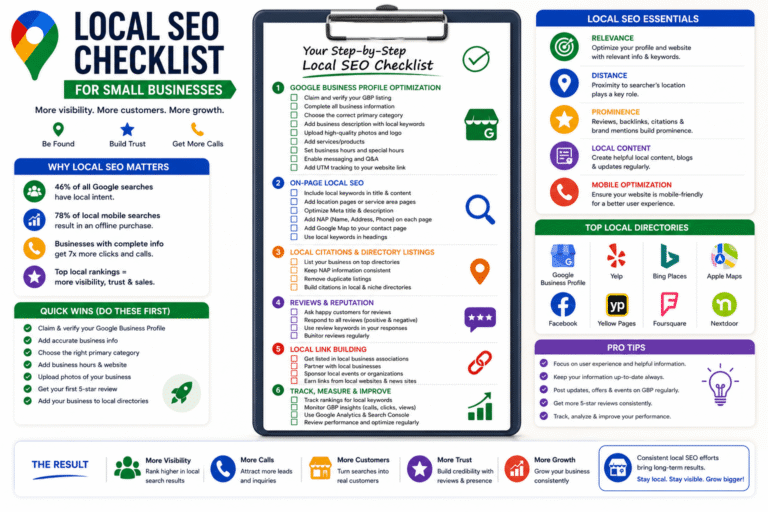
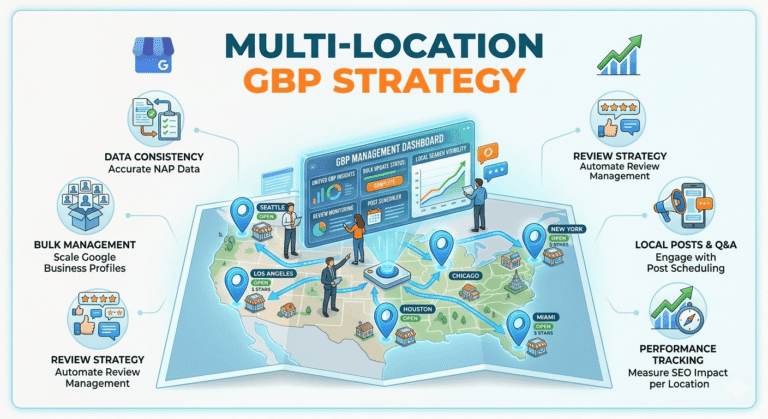
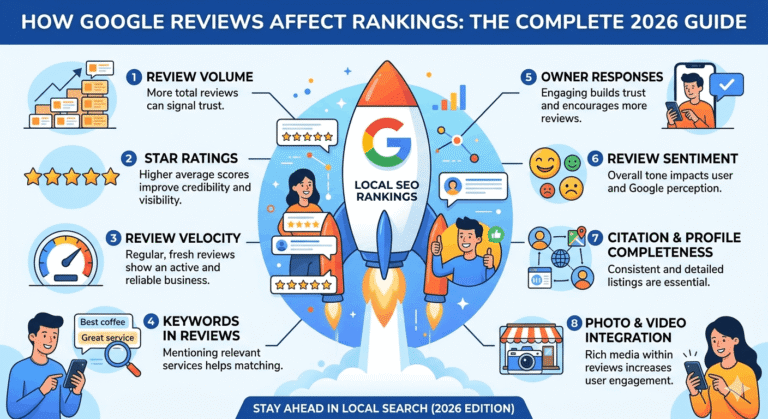
How We Increased Calls by 40% Using GBP

A few months ago, a local service business approached us with a frustrating problem.
They had:
- A decent reputation offline
- Good customer service
- A functional website
- Competitive pricing
But despite all that, they were barely generating consistent calls from Google Maps.
Their competitors were dominating local search results.
Even worse:
Businesses with fewer years of experience were outranking them consistently.
The client’s Google Business Profile existed, but it was under-optimized, inactive, and missing several important local SEO signals.
At the time, they were averaging:
- Low weekly call volume
- Minimal Google Maps visibility
- Weak engagement
- Poor keyword relevance
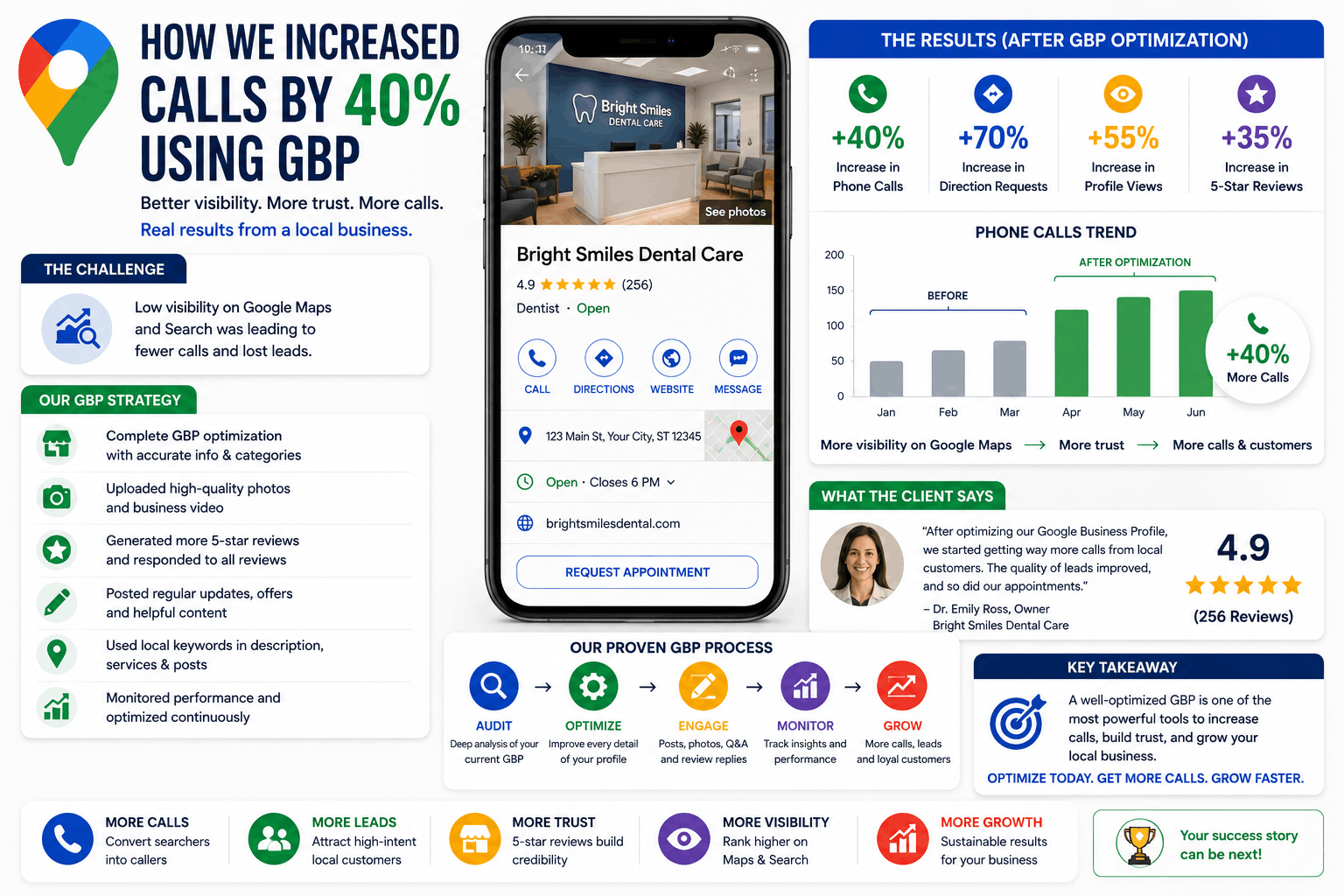
Within a few months of focused GBP optimization and local SEO improvements, calls increased by 40%.
Not through ads.
Not through aggressive promotions.
But through strategic Google Business Profile optimization, local SEO improvements, and trust-building signals.
This case study explains exactly what we changed, what worked best, and the lessons businesses can apply to improve Google Maps lead generation.
The Client’s Initial Situation
Business Overview
The client operated in the home services industry in a highly competitive metropolitan area.
Their business depended heavily on:
- Phone calls
- Local leads
- Emergency service inquiries
- Google Maps visibility
Most customers searched terms like:
- “service near me”
- “best local provider”
- “emergency repair”
before calling.
Heavy Local Competition
The local market was crowded.
Competitors were aggressively investing in:
- Reviews
- Google Maps SEO
- Local landing pages
- Backlinks
- GBP activity
The client’s profile looked inactive compared to competitors.
Weak Google Maps Visibility
The business rarely appeared in the top 3 local map results for important keywords.
Even when it ranked, visibility was inconsistent depending on the user’s location.
Low Calls and Leads
Google Business Profile Insights showed:
- Low call activity
- Weak engagement
- Limited direction requests
- Minimal profile interactions
The business relied too heavily on referrals instead of scalable local SEO.
Inconsistent Reviews
The review profile had several problems:
- Low review velocity
- Long gaps between reviews
- Few detailed reviews
- Minimal owner responses
Competitors looked significantly more active and trusted.
Poor GBP Optimization
The profile lacked:
- Complete services
- Fresh images
- Regular posts
- Proper category targeting
- Strong descriptions
The profile simply didn’t look authoritative.
Website & Local SEO Issues
The website also had several local SEO gaps:
- Weak service pages
- Poor mobile experience
- Slow loading speed
- No local landing pages
- Weak internal linking
- Minimal schema markup
The Problems We Identified
After a complete GBP and local SEO audit, several clear issues emerged.
Incorrect Categories
The primary category was too broad and less relevant than competitors using more targeted categories.
This weakened relevance signals significantly.
Weak Business Description
The original business description was generic and poorly optimized.
It lacked:
- Service keywords
- Geographic relevance
- Trust signals
- Conversion-focused messaging
Poor Review Profile
The business had reviews, but:
- Not enough fresh reviews
- Weak keyword diversity
- Limited engagement
Inconsistent NAP
We discovered inconsistent business information across:
- Directories
- Citations
- Secondary platforms
Even small inconsistencies weaken local trust signals.
Weak Local Landing Pages
The website lacked:
- Area-specific pages
- Hyperlocal targeting
- Geographic relevance
This limited local ranking potential.
Low Engagement Signals
The GBP showed minimal activity:
- Few photos
- No posts
- Limited Q&A
- Weak interactions
Google tends to reward active profiles.
Missing Services & Products
Important services were not properly added inside GBP.
This reduced topical relevance.
Poor Images
The existing images were:
- Low quality
- Outdated
- Inconsistent
Visual trust matters heavily in local SEO.
Lack of Google Posts
The profile had zero posting activity.
Competitors were posting:
- Offers
- Updates
- Events
- Service content
regularly.
Technical & Local SEO Gaps
The website lacked:
- Local schema
- Fast mobile performance
- Clear CTAs
- Structured service architecture
Our GBP Optimization Strategy
Google Business Profile Audit
We began with a full audit covering:
- Categories
- Reviews
- Competitors
- Keywords
- Visibility
- Engagement
- Local rankings
This gave us a clear roadmap.
Category Optimization
We changed the primary category to a more accurate high-intent option.
We also added carefully selected secondary categories.
Why It Mattered
Categories are among the strongest GBP ranking factors.
Result
Within weeks, visibility improved noticeably for multiple keywords.
Business Description Rewrite
We rewrote the business description to include:
- Core services
- Geographic relevance
- Trust elements
- Natural keywords
Example Improvements
Before:
“Professional local service provider.”
After:
“Providing fast emergency repair and installation services across [city] with trusted local technicians and same-day support.”
Services Optimization
We added detailed service entries for:
- Emergency services
- Installations
- Maintenance
- Specialty offerings
Why It Worked
This improved topical relevance and keyword coverage.
Products Setup
Even service businesses can benefit from product-style entries.
We created:
- Service packages
- Featured offerings
- Visual service highlights
Image & Video Optimization
We uploaded:
- Team photos
- Service process images
- Branded visuals
- Before/after examples
- Short videos
Lessons Learned
Fresh visuals improved engagement faster than expected.
Review Generation System
This became one of the highest-impact improvements.
We built:
- SMS workflows
- Email follow-ups
- QR code requests
- Staff prompts
Why It Mattered
Review velocity improved significantly.
Review Response Optimization
We responded to every review professionally and consistently.
Responses included:
- Gratitude
- Service references
- Local context
without keyword stuffing.
Google Posts Strategy
We began posting weekly:
- Tips
- Offers
- Updates
- Seasonal content
- Service highlights
Why It Helped
Fresh activity improved engagement and profile freshness.
Q&A Optimization
We seeded common questions proactively.
Examples:
- Service availability
- Emergency support
- Coverage areas
This improved conversions and reduced friction.
Website Local SEO Improvements
The website required major local optimization.
We added:
- Local service pages
- Location pages
- Internal links
- Better CTAs
- Local schema
Citation Cleanup
We corrected inconsistent NAP information across major directories.
Why It Helped
This strengthened trust signals significantly.
Local Backlink Building
We acquired local backlinks through:
- Community sponsorships
- Local partnerships
- Industry directories
Observation
Even a few quality local links improved authority noticeably.
Conversion Optimization
We improved:
- Click-to-call visibility
- Mobile UX
- Contact forms
- Service CTAs
Important Insight
Traffic alone does not increase calls.
Conversion optimization matters equally.
Call Tracking Setup
We implemented proper call tracking without damaging NAP consistency.
This helped measure real GBP impact accurately.
Behavioral Signal Optimization
We encouraged:
- Calls
- Directions
- Website clicks
- Engagement
through better CTAs and profile activity.
The Review Strategy That Increased Trust
Reviews became one of the biggest growth drivers.
How Reviews Were Requested
Instead of generic requests, we used:
- Personalized SMS follow-ups
- Friendly email requests
- Post-service prompts
SMS & Email Workflows
Timing mattered heavily.
The highest-performing review requests were sent:
- Shortly after successful service completion
QR Code Strategy
We added QR codes to:
- Invoices
- Vehicles
- Business cards
This reduced friction significantly.
Staff Training
Staff learned how to request reviews naturally during positive customer interactions.
This dramatically improved participation.
Review Response Process
Every review received a thoughtful response.
Why It Worked
Potential customers could clearly see:
- Responsiveness
- Professionalism
- Trustworthiness
Impact on Rankings & Conversions
As review activity increased:
- Calls increased
- Rankings improved
- Click-through rates improved
The trust effect was obvious.
Website & Local SEO Improvements
Local Landing Pages
We created hyperlocal pages targeting nearby suburbs and service areas.
Example
“Emergency Service in [Suburb]”
Mobile Optimization
The previous mobile experience was poor.
We improved:
- Speed
- Layout
- Click-to-call buttons
- Navigation
Page Speed Improvements
Faster pages reduced bounce rates noticeably.
Click-to-Call Optimization
We made phone numbers highly visible across:
- Headers
- Mobile layouts
- Service pages
Schema Markup
We added:
- LocalBusiness schema
- FAQ schema
- Review schema
This improved semantic understanding.
Internal Linking
We improved topical relevance through strategic internal linking.
Content Improvements
We expanded thin pages into:
- Helpful service content
- FAQs
- Educational resources
The Results After Optimization
After several months, the improvements became very clear.
Calls Increased by 40%
This was the most important business KPI.
Google Business Profile call insights showed a major upward trend.
Direction Requests Increased
More users requested directions through Google Maps.
This indicated stronger local visibility and trust.
Website Clicks Improved
Website interactions increased significantly after profile optimization.
Google Maps Rankings Improved
The business began appearing consistently in:
- Top 3 local pack positions
- High-intent local searches
Review Growth Accelerated
Review volume and freshness improved dramatically.
Traffic Growth
Organic local traffic increased steadily over time.
Conversion Improvements
More importantly:
Traffic quality improved.
The business generated:
- Better leads
- Higher-intent calls
- Stronger conversion rates
Before vs After Comparison
| Metric | Before | After |
| Monthly Calls | Low baseline | +40% increase |
| Reviews | Inconsistent | Steady growth |
| Google Posts | None | Weekly |
| Local Rankings | Inconsistent | Top local positions |
| Website CTR | Weak | Improved |
| Mobile Engagement | Poor | Strong |
Timeline of Improvements
| Timeline | Key Milestones |
| Month 1 | Audit + GBP optimization |
| Month 2 | Reviews + local pages |
| Month 3 | Ranking improvements |
| Month 4 | Significant call growth |
| Month 5+ | Continued momentum |
Key Takeaways From the Campaign
What Worked Best
The biggest impact came from:
- Review velocity
- Category optimization
- Local landing pages
- Better engagement
Biggest Ranking Factors
The strongest ranking improvements correlated with:
- Reviews
- GBP activity
- Local relevance
- Website quality
Unexpected Insights
Fresh photos improved engagement more than expected.
Mistakes Avoided
We intentionally avoided:
- Keyword stuffing
- Fake reviews
- Spam backlinks
- Aggressive shortcuts
Long-Term Strategies
Sustainable local SEO wins usually come from:
- Consistency
- Trust
- Engagement
- Authority
not hacks.
Common GBP Mistakes Businesses Still Make
Keyword Stuffing
Spammy business names create suspension risks.
Ignoring Reviews
Review inactivity weakens trust signals.
Inconsistent NAP
Small inconsistencies still hurt local SEO.
Weak Content
Thin websites struggle competitively.
Low-Quality Photos
Visual trust matters heavily.
Duplicate Listings
Duplicate profiles confuse Google.
Fake Engagement Tactics
Shortcuts create long-term risks.
Advanced Insights & Future Strategy
AI Search Optimization
AI-generated local search is becoming increasingly important.
Businesses with:
- Strong authority
- Helpful content
- Trusted reviews
will benefit most.
Behavioral Signals
Google increasingly values real user engagement.
Entity SEO
Brand authority matters more than ever.
Voice Search
Conversational local searches continue growing rapidly.
Hyperlocal SEO
Suburb-level targeting became extremely effective.
Ongoing Optimization Plans
The campaign continues focusing on:
- Fresh reviews
- GBP activity
- Local content
- Engagement optimization
Frequently Asked Questions
How long did it take to increase calls?
Meaningful improvements appeared within several months of consistent optimization.
What had the biggest impact on rankings?
Review generation, category optimization, and local landing pages were major drivers.
Did reviews help increase calls?
Absolutely. Reviews improved both rankings and customer trust.
How important are Google Posts?
They help maintain profile activity and engagement.
Were backlinks important?
Yes. High-quality local backlinks improved authority significantly.
Does website SEO affect GBP rankings?
Yes. Strong websites reinforce local trust and relevance.
What are behavioral signals?
Actions like:
- Calls
- Clicks
- Directions
- Engagement
likely influence local rankings.
How often should GBP be updated?
At least weekly with fresh activity.
Are fake reviews risky?
Very risky. Authentic trust signals work better long term.
Can small businesses compete locally?
Absolutely. Strong GBP optimization can outperform larger competitors.
Does mobile optimization matter?
Yes. Most local searches happen on mobile devices.
How important is local content?
Very important for geographic relevance and authority.